Lose Weight Without Dieting Every Day
The 4:3 Diet: Eat normally 4 days a week. Reduce calories on just 3.
I lost 50 pounds using the 4:3 Diet, and I’ve managed to keep the weight off ever since.
I created this guide to share what I learned, explain the research behind the approach, and show you how to put it into practice.
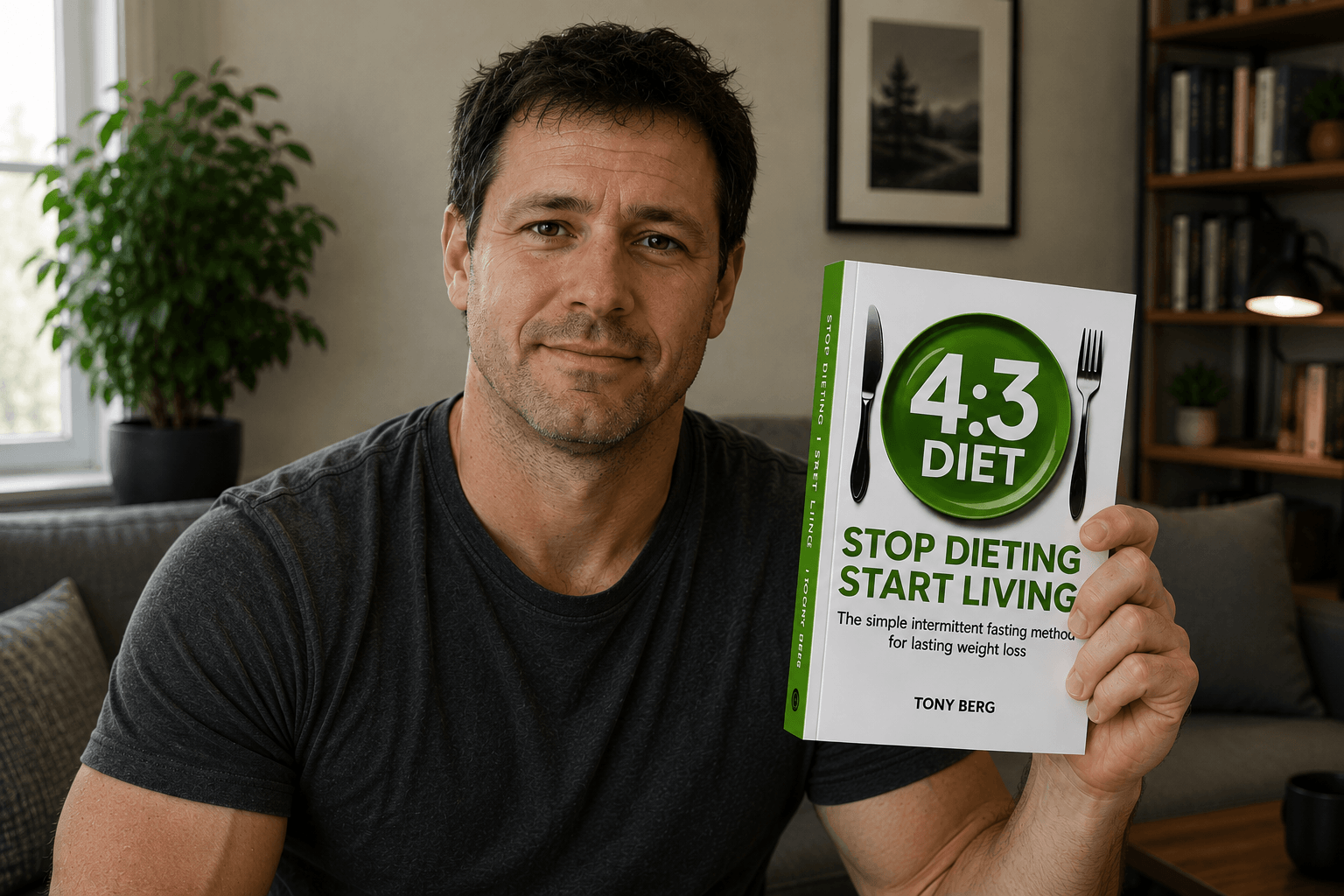
What Is the 4:3 Diet?
The idea behind the 4:3 Diet is surprisingly simple.
Instead of reducing your calories every day of the week, you have four normal eating days and three lower-calorie days.
That’s where the name comes from:
4 normal eating days
3 lower-calorie days
If you’ve heard of the popular 5:2 Diet, the principle is similar. The difference is that 4:3 adds one additional lower-calorie day each week.
What attracted me to the approach was its simplicity and flexibility.
I’d tried diets before and knew that I could lose weight. My challenge was finding something I could continue following over the long term.
Eventually, I would get tired of constantly thinking about what I could and couldn’t eat.
With 4:3, I wasn’t trying to diet seven days a week.
That small distinction ended up making a very big difference for me.
Hi, I’m Tony
I’m 45 years old and live in Sweden.
I’m not a doctor, nutritionist or personal trainer, and I didn’t create the 4:3 Diet.
I’m simply someone who wanted to lose weight and find an approach that I could realistically maintain.
When I started, I weighed around 250 pounds.
Like a lot of people, I’d tried losing weight before. I knew I was capable of losing weight, but I wanted to find a way of doing it that could become part of my normal life rather than something temporary.
I didn’t want to spend every day thinking about dieting. I wanted something that could fit around normal life, including work, family, weekends, vacations, dinners and everything else.
That’s what eventually led me to the 4:3 Diet.
Before starting, I spent weeks reading about the approach and the research behind intermittent fasting. What I found made enough sense to me that I decided to try it myself.
About nine months later, I had gone from approximately 250 pounds to 200 pounds.
50 pounds lost
I kept going.
I’ve maintained the weight I lost and continue following the 4:3 Diet today.
That’s ultimately why I decided to write this guide.
I found an approach that worked for me and, crucially, one I could continue living with.
Starting weight: 250 lbs
Weight lost: 50 lbs
Current weight: 200 lbs
Time to lose it: About 9 months
Still following 4:3: Yes
These are my personal results. Individual results vary.
What Does the Research Say?
My own experience was what convinced me personally, but I also wanted to understand the research behind the approach.
One study in particular caught my attention.
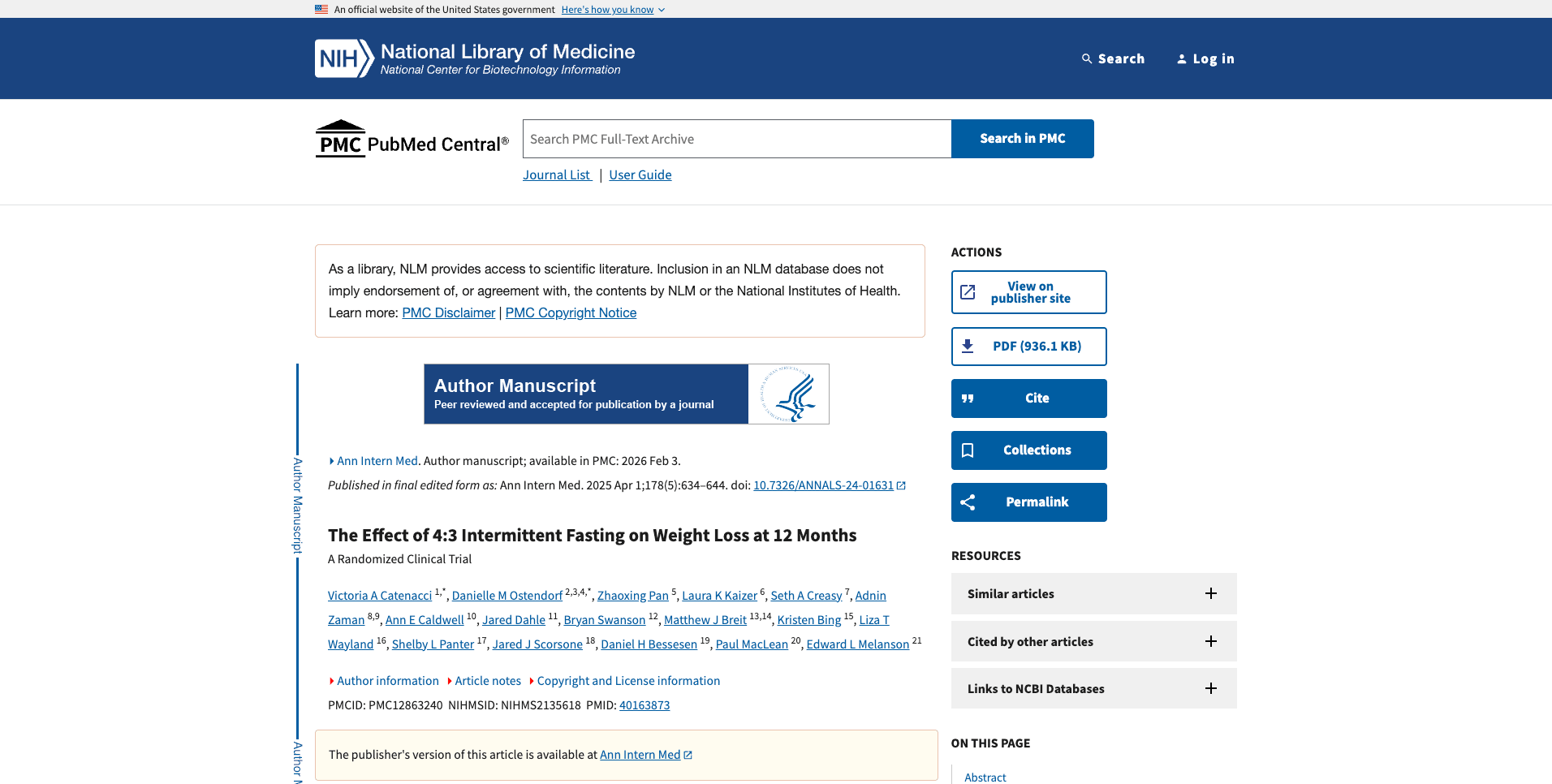
In 2025, researchers published the results of a 12-month randomized clinical trial comparing a 4:3 intermittent-fasting program with daily calorie restriction.
Participants following the 4:3 intermittent-fasting program lost an average of 7.6% of their body weight.
Participants following daily calorie restriction lost an average of 5.0%.
The study gave me another reason to take the approach seriously: 4:3 intermittent fasting had been studied in a controlled clinical setting over an extended period, with encouraging results.
READ ABOUT THE STUDY👇
Read the original research study
Read the Verywell Health article
Read the New York Post article
Why I Wrote the Guide
When I first started researching the 4:3 Diet, I expected to find one place that explained everything clearly.
Instead, I found information scattered across research papers, articles, videos and discussions.
The basic concept was easy to understand. But the practical questions weren’t always so simple.
How should I structure my week?
How many calories should I eat on lower-calorie days?
What should I eat?
What happens if I need to change days?
What about exercise?
How do I make this something I can actually continue doing?
I spent weeks researching those questions before I felt comfortable starting, and I continued learning as I followed the diet myself.
Eventually, I decided to create the guide I wish I’d had at the beginning.
It brings together the research I found with the practical experience I gained while losing 50 pounds and continuing with the 4:3 Diet afterwards.
My Goal Is Simple
My goal is simple: to give you the information you need to understand the approach, decide whether it fits your lifestyle, and know how to get started.
I want you to finish the guide with a clear understanding of what following the 4:3 Diet actually looks like in everyday life.
You should feel confident about how the approach works, what to expect along the way, and how to make it fit around your own schedule and circumstances.
Rather than simply following a set of instructions, my hope is that you’ll understand the principles behind 4:3 well enough to make informed choices and create a routine that works for you.
Because ultimately, the real value of any approach to weight loss is being able to make it work in the real world.
That’s what I hope this guide helps you achieve.
The Complete 4:3 Diet Guide
50,000+ words covering the 4:3 Diet from start to finish.
I wrote this guide for people who want to understand the approach properly and have the practical information in one place instead of spending weeks researching it themselves.
Inside, you’ll learn:
How the 4:3 Diet works
The science and research behind the approach
How to get started step by step
How to determine your lower-calorie targets
How to structure your 4:3 week
How to make lower-calorie days easier to manage
Common mistakes and how to avoid them
How to handle exercise while following 4:3
How to stay consistent over the long term
Answers to the most common questions about 4:3
Is the 4:3 Diet Right for You?
The 4:3 Diet offers a different approach for people who find reducing calories every day difficult to maintain.
Instead, your week has a clear structure:
4 normal eating days
3 lower-calorie days
For me, having four normal eating days each week made the entire process feel more flexible and easier to incorporate into everyday life.
That doesn’t mean 4:3 is right for everyone.
But if you’ve found traditional daily dieting difficult to maintain and prefer the idea of a weekly structure with more flexibility, it may be an approach worth exploring.
The guide will help you understand how 4:3 works, how to structure it properly, and what I’ve learned from following it myself.
Everything in One Place
When I started, the information I needed was spread across research papers, articles, videos and discussions.
I’ve brought what I learned together into one comprehensive guide containing more than 50,000 words.
Instead of spending weeks piecing the information together yourself, you can understand the approach, explore the research, learn how to get started and find answers to the practical questions that come up along the way.
All in one place.
A Final Word From Me
The 4:3 Diet changed the way I think about weight loss.
For the first time, I found an approach that didn’t make me feel like I had to be “on a diet” every day.
What started as a way to lose weight eventually became part of my normal life.
That’s why I wrote this guide.
I’ve put everything I wish I’d known when I started into one place, so you don’t have to spend weeks trying to piece it all together yourself.
If 4:3 sounds like an approach that could fit your life, I hope this guide helps you understand it, get started and find a way of following it that works for you.
Important Disclaimer
The information provided in this guide and on this website is for general informational purposes and is not a substitute for professional medical advice.
Consult an appropriate healthcare professional before making significant changes to your diet, particularly if you have a medical condition, take medication, are pregnant or breastfeeding, or have a history of an eating disorder.