
Why Trying to Be Perfect Can Make Weight Loss Harder
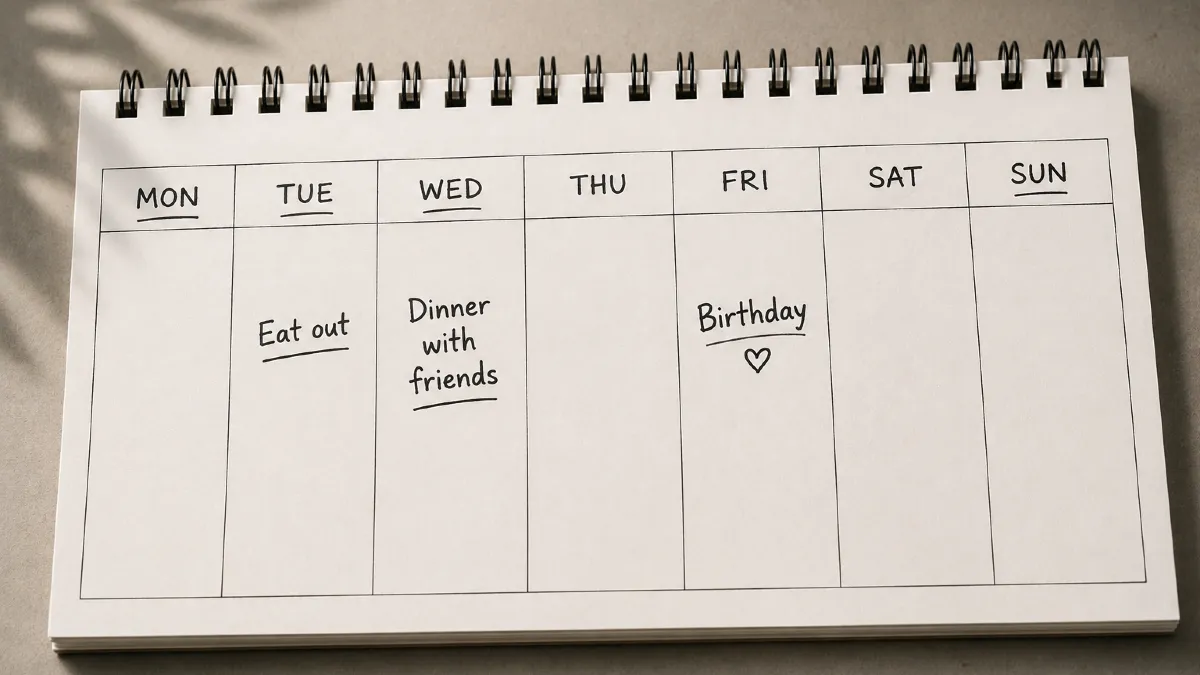
You start on Monday.
This time, you’re going to do everything right.
No unnecessary snacks.
No desserts.
No fast food.
No excuses.
Monday goes perfectly.
Tuesday too.
Then Wednesday afternoon someone at work brings in cake.
You tell yourself you’re not going to have any.
But eventually, you do.
And almost immediately, the thought appears:
“Well, I’ve ruined today anyway.”
So dinner becomes a little bigger.
Maybe you have something sweet afterward.
And by the evening, Wednesday hasn’t just become a day when you ate a piece of cake.
It has become a bad day.
Tomorrow you’ll try again.
Or perhaps you’ll start properly next Monday.
Sound familiar?
This all-or-nothing way of thinking is one of the strangest things about dieting.
We set incredibly high standards for ourselves and then treat anything less than perfection as failure.
But when it comes to losing weight, trying to be perfect can sometimes make things harder than they need to be.
The Perfect Diet Rarely Meets the Real World
It’s easy to design the perfect diet in your head.
You know exactly what you’re going to eat.
Your fridge is stocked.
Your meals are planned.
You’re motivated.
Nothing unexpected happens.
Unfortunately, real life doesn’t work like that.
Someone invites you to dinner.
Your children want pizza.
There’s a birthday.
You go away for the weekend.
You work late and don’t feel like cooking.
You’re tired.
You’re stressed.
Or maybe you simply want an ice cream because it’s a beautiful summer evening.
None of these things are unusual.
They’re life.
Yet many diets are approached as though none of them are supposed to happen.
And when they inevitably do, people often blame themselves rather than questioning whether their expectations were realistic in the first place.
One Meal Doesn’t Ruin Anything
Imagine you’ve eaten well for ten days.
Then on Saturday evening you go to a restaurant and eat considerably more than you intended.
What happened?
You ate more than planned at one meal.
That’s it.
You didn’t erase the previous ten days.
You didn’t suddenly lose all the progress you’ve made.
And you certainly don’t need to wait until Monday to continue.
But that’s often not how we think.
Instead, one meal becomes:
“I’ve ruined my diet.”
And if the diet is already ruined, why not have dessert?
And if Saturday is ruined, why not enjoy Sunday too?
Then you can start again Monday.
One meal that could have simply been one meal becomes an entire weekend.
Not because of the food itself.
Because of the belief that anything short of perfection counts as failure.
The “I’ll Start Again Monday” Problem
Monday has somehow become the official headquarters of weight loss.
We start diets on Monday.
We restart diets on Monday.
We promise ourselves that next Monday will be different.
There’s nothing wrong with Monday, of course.
The problem is what happens between now and then.
If it’s Thursday and you believe you’ve failed, waiting until Monday gives you another three days where you’ve mentally given yourself permission not to care.
But why?
If you spill coffee on your shirt at 10 in the morning, you don’t spend the rest of the day deliberately pouring coffee over yourself.
You deal with it and continue with your day.
Eating can work the same way.
A decision you weren’t happy with doesn’t require another one.
Your next choice doesn’t have to match your last choice.
Consistency and Perfection Are Not the Same Thing
These two ideas are easily confused.
Being consistent doesn’t mean doing something perfectly.
It means continuing to do it over time.
Imagine two people trying to change how they eat.
The first person follows an incredibly strict plan perfectly for two weeks, becomes exhausted by it and stops completely.
The second person has good weeks, imperfect weeks, restaurant meals, holidays and occasional days when things don’t go according to plan.
But six months later, that person is still going.
Who was more consistent?
Clearly, the second person.
We tend to admire perfection because it’s easy to see.
Consistency is less dramatic.
It’s getting back to your normal routine after a weekend away.
It’s continuing after a birthday.
It’s not turning one difficult day into a difficult month.
And over the long term, that ability to continue may matter far more than having a perfect Tuesday.
You Don’t Get Extra Points for Making Weight Loss Miserable
There’s sometimes an unspoken belief that losing weight is supposed to be difficult.
If you’re hungry, the diet must be working.
If you’re saying no to everything you enjoy, you must be disciplined.
If the diet feels easy, perhaps you’re not trying hard enough.
But weight loss isn’t a test of character.
Nobody hands out a trophy at the end for choosing the most miserable route.
The real question isn’t:
“How strict can I be?”
A much more useful question might be:
“Could I realistically continue doing this?”
For a week?
Probably.
For a month?
Maybe.
For six months?
That’s where the answer often changes.
Real Life Isn’t Seven Identical Days
This is something we often forget when thinking about food.
Monday isn’t Saturday.
A quiet Tuesday at home isn’t the same as your friend’s wedding.
Christmas Day isn’t the same as February 17th.
Some days we eat more.
Some days we eat less.
Some days are social.
Some days are busy.
Some days everything goes according to plan.
Other days absolutely nothing does.
That’s normal.
Yet traditional dieting often tries to squeeze all seven days into the same box.
The same restrictions.
The same expectations.
The same feeling that you’re supposed to be “on a diet” from the moment you wake up until the moment you go to bed.
And that’s one of the ideas that makes the 4:3 Diet different.
Where the 4:3 Diet Fits In
The basic idea behind the 4:3 Diet is simple: you have four normal eating days and three lower-calorie days each week.
That means every day doesn’t need to look the same.
You’re not trying to create seven perfect diet days.
And psychologically, that distinction can be important.
Instead of thinking:
“I have to diet every day until I reach my goal.”
You’re looking at a week made up of different kinds of days.
There is structure.
But there is also room for normal life.
That doesn’t mean the four normal days are four days to eat absolutely anything in unlimited amounts.
They’re normal days.
And that’s an important distinction.
But it does mean that enjoying a normal meal doesn’t automatically have to feel like breaking your diet.
Stop Turning Food Into Pass or Fail
Perhaps one of the most useful changes you can make has nothing to do with what is on your plate.
It’s changing the way you judge yourself afterward.
A salad isn’t a pass.
A pizza isn’t a fail.
One day doesn’t prove that you’re disciplined.
Another doesn’t prove that you aren’t.
Weight loss happens over time.
Your habits happen over time.
And your life happens over time.
Looking at every individual meal as a test you’re either passing or failing makes eating far more complicated than it needs to be.
Your Next Decision Still Counts
Maybe yesterday didn’t go according to plan.
Maybe lunch today didn’t either.
That doesn’t make your next decision meaningless.
You don’t have to wait until tomorrow.
You certainly don’t have to wait until Monday.
And you don’t have to punish yourself for what happened earlier.
Just continue.
That’s perhaps one of the biggest differences between people who temporarily follow a diet and people who eventually build a different way of eating.
They stop constantly starting over.
Because once you accept that perfection was never required, there’s nothing to start over from.
You simply keep going.
A Good Diet Has to Survive an Imperfect Life
There will always be birthdays.
There will always be restaurants.
There will always be holidays, stressful weeks and evenings when your plans change.
And occasionally, there will be cake on a Wednesday afternoon.
A way of eating that only works when life goes perfectly isn’t particularly useful.
Because life doesn’t go perfectly.
Perhaps the goal shouldn’t be finding a diet you can follow perfectly.
Perhaps it should be finding one that still works when you don’t.
That’s one of the ideas at the heart of the 4:3 Diet.
You don’t need a perfect week.
You need an approach you can keep coming back to.